Showing posts with label review. Show all posts

Wednesday, March 9, 2016

PHANTOM 4 | DJI’s Most Advanced Drone Ever

The sexiest drone that DJI ever designed, welcome to the era of VISION.

How do you make one of the very best drones out there even better? Take out the single factor that is guaranteed to screw things up - human error.

When DJI revealed the Phantom 4 drone in New York this month, we were expecting a refined design and style, much better battery life, and possibly even a camera upgrade or two.

We got all three, but it was the surprise extras that really turned heads.


Now that we've had time to see the new crash avoidance and automatic tracking systems in action, it is about time to bring you some early first impressions on what could turn out to be the greatest quadcopter out there.

“The Phantom 4, it’s the first consumer unit that can see the world around it and adjust accordingly, the next big step towards a truly autonomous aircraft.” — The Verge, March 1, 2016 

“Smarter, leaner, faster, stronger? That's the promise with DJI's Phantom 4 ” — Engadget, March 1, 2016

“This quadcopter can do something other drones can’t: keep you and me from being idiot pilots.” — The Wall Street Journal, March 1, 2016

The Phantom 4 is an evolution of the Phantom 3, and from the appearance, it might be tough for a drone novice to tell them apart.


The matt white plastic has been swapped out for a glossy finish, with the physique and landing gear slimmed down to cut a much better line through the air, but otherwise, the basic design and style hasn't changed.

The camera gimbal is supported on each side now, rather than just one, and a lot of the mechanism has been moved inside the drone body, which once more helps with the aerodynamics.


Exposing the motors gives it a lot more aggressive appearance, but also tends to make room for the activity LEDs to sit underneath them. This will let skilled pilots get that small bit closer to walls and obstacles when flying in low light.

Even the landing gear has been redesigned, with longer, thicker legs that ought to imply safer landings even if it is really windy.

icon
icon

Combine that with DJI's Care plan, and you shouldn't have to worry about accidents keeping you grounded.

All minor tweaks by themselves, for sure, but as a whole, they give the Phantom 4 a significantly fresher appeal - even if it meant ditching the coloured go-faster stripes of the old models.


The 4K camera on the Phantom 3 could produce some incredible looking video, so it's not an enormous surprise that DJI hasn't messed with the formula.

The sensor stays the same for the Phantom 4, with just with a few little tweaks.

The lens has been upgraded for sharper images, especially at the edges of your shots, and for much less distortion.


DJI's demo footage looked fantastic, but we'll need to see video side-by-side with the Phantom 3 to see if the differences are straightforward to spot.

You'll be capable of shooting 1080p at 120fps for the first time, which ought to make for some cool slo-mo shots, but the 4K recording is still stuck at 30fps.

An enhancement to 60fps would have been an ace, but seeing as the DJI Inspire does not even do that, it's not a surprise to see it missing here.

It's how you will use the camera that's changed, with ActiveTrack taking the challenge out of flying and focusing on an object at the same time.


Rather than flying the drone and controlling the camera angle simultaneously (usually two-individual jobs for professional drone photographers), the Phantom 4 lets you tap on the remote screen to choose a target.

The drone then creates a 3D model of that object and automatically keeps it in the frame as you fly around. You can make fine adjustments to focus, framing and camera settings on the fly, or let the Phantom do all the adjustments.

icon
icon

It really is brilliantly simple and allows for perfect tracking even in crowded areas.

Even better, the Phantom can do all this while maintaining an eye out for obstacles - keeping you from crashing your ultra-expensive drone since you had been also busy following the action on the ground.


Two cameras on the front and two on the bottom of the drone develop a 3D model of the planet around it, with the electronic brain inside looking for trees, walls, and any other barriers that would otherwise bring it down.

Try to drive the Phantom 4 into a wall and it'll automatically slam on the brakes. Aim it at an obstacle, and it'll go above or about it before returning to its original trajectory. If the 3D model cannot locate a way around, it'll just hover in location until you take control once more.


This safety net will be perfect for novice pilots, but it gets even simpler. TapFly is the second new flight mode, which ditches the twin stick controller in favour of touchscreen controls.

Tap a button to take off, set the maximum distance you want it to fly away from you, and the Phantom 4 will move towards the horizon. You can tap anywhere on the live video feed and the drone will alter the path.

It dodges obstacles in this mode as well, so newbies can get closer to their subjects even if they haven't got the talent to keep it steady by hand.


Twin ultrasonic sensors combine with the cameras to help keep the drone perfectly level when hovering. Other Phantoms we've used continually adjust their position, inches at a time, but the Phantom 4 was eerily steady - if the propellers weren't spinning, you'd feel it was frozen in mid-air.

It's impressive stuff, and we cannot wait to see what kinds of footage will begin springing up on YouTube as soon as knowledgeable pilots get their hands on one.

The Phantom 3 was hardly a slouch, but the Phantom 4 is a bit of a speed demon.


Usually, it can zip along at 35mph, but switch to Sport mode and you'll get a Quick and Furious-style nitrous boost that pushes the top speed up to 45mph.

It becomes a complete beast when you are flying at full whack, with impeccable speed and agility. DJI's pilots compared it to flying the pro-level Inspire, only for considerably less cash.

You are going to burn through batteries a lot faster in Sport mode, so newbie pilots must stick to Regular mode to remain up in the air longer.

DJI has boosted flight time to 28 minutes, up from 23 in the Phantom 3, but has utilized a bigger battery to do it. That indicates any spare batteries you've got for an existing Phantom are rendered useless.


The tweaked looks, faster top speed and enhanced camera lens are all welcome modifications, but it's the clever object tracking and automatic flight modes that will make it ideal for novice pilots and experienced aerial photographers alike.

At $1399.00 it is much more expensive than the Phantom 3 Professional, but if you've waited this long to get onboard the drone bandwagon, the higher price definitely looks worth it.


icon
icon

Tuesday, February 23, 2016

Assassin's Creed Chronicles Reviews | China and Russia

Assassin's Creed Chronicles

China
Assassin's Creed Chronicles: China follows a Chinese assassin named Shao Jun who, we learn by way of flashbacks, was trained by Assassin Creed 2's Ezio. (You might have currently met Shao Jun and be familiar with this plot point if you have noticed Ubisoft's 2011 brief film, Assassin's Creed: Embers.) Shao Jun returns to China to discover that a group of evil Templar have all but wiped out the other assassins in the region. Even though in search of vengeance, she's also attempting to track down a mysterious artifact that has fallen into the hands of the Templar.


And that is about the most I can try to remember about the plot. Shao Jun appears cool but doesn't have considerable character development, and story movement is largely kept to brief cutscenes in amongst every level. It is unobtrusive, which is terrific, even though if you're somebody who cares about the overall fiction of the Asssassin's Creed universe, never anticipate any key revelations right here.

The actual gameplay of Assassin's Creed Chronicles: China extra than tends to make up for the plot in bringing a thing fresh and critical to the series. Exactly where most Assassin's Creed games have a rambling pace — dozens of hours of game stretched across an open planet littered with hundreds of distractions — this spin-off is a lot more focused. You move by way of mostly 2D levels, operating from left to right most of the time, figuring out methods to sneak past or kill any Templars who get in your way.

I say "largely 2D" mainly because Assassin's Creed Chronicles: China allows you to move between distinctive 2D planes at specific points. For example, you may be able to drop down onto a ledge in the foreground and shimmy previous a guard who is patrolling on the "key" 2D path. This leads to some elegant and interesting level design, and forced me to stay aware in my continual search for the best routes via an area.

I was also urged to take in my surroundings cautiously due to how stunning they are. Assassin's Creed Chronicles: China employs a style that looks like classic brush paintings in motion. Splashes of color streak across the screen and are used in subtle strategies to help you recognize usable objects in the atmosphere. And the regular violence of the series is toned down to practically tasteful slashes of red anytime you take an enemy down.


Of course, ideally you will not have to take down very many enemies at all. Assassin's Creed Chronicles: China gives Shao Jun a good list of tools to aid her previous foes cross her path. Firecrackers can briefly stun guards, knives can snap ropes to open passageways or drop boxes, and in a pinch, Shao can basically whistle to get a foe's focus exactly where she desires it.

The idea behind the style of the tools (and the game as a whole) is that it under no circumstances goes overboard. You happen to be provided with almost every thing you will have to operate with for the whole game by the finish of the third level, around an hour in. Chronicles: China fleshes factors out by introducing difficult new enemy layouts and clever level style twists, rather than by flooding the player with dozens of selections in how to approach each and every scenario.

On the down side, that suggests that Shao Jun is a significantly less effective assassin than previous protagonists. Stealth is much more than heavily encouraged throughout the game, it is essential. Technically you can fight enemies with conventional melee combat, but Shao Jun can not take more than two or 3 hits for most of the game, and her arsenal of attacks is slow, clunky and not especially entertaining.

But at least I felt okay getting discouraged from seeking out hand-to-hand combat. The same thing can't be said for the handful of "speed run" levels in Assassin's Creed Chronicles: China. These levels seek to give some selection by emulating the significant action of set piece moments that other games in the series are identified for. Environments explode, lots of individuals die and Shao Jun will have to dash through the levels at best speed, periodically fleeing from a rapidly encroaching fire.


In a frustrating turnabout, these speed run levels trade the slow, methodical play of the rest of the game for a frantic foot race across the map. Assassin's Creed Chronicles: China's precise platforming controls operate just fine in the former, but in the latter, below the stress of an approaching wall of flame, they can be a frustrating mess. Each and every one of these levels had at least one instance where I died a number of times over again in the same spot, unable to judge the exact moment necessary to tap the jump button to get across a tricky gap whilst nonetheless avoiding a fiery death.

WRAP UP:
Chronicles: China is the brightest twist on the Assassin's Creed formula yet.
These undesirable levels are only a fraction of the game — a few five-minute scenarios out of the five or six hours total that Assassin's Creed Chronicles: China presents. If you are prepared to look beyond that, it twists the Assassin's Creed formula in one of the smartest approaches I've noticed since the franchise started. It's also almost surely my favourite stand-alone game from the series in years.

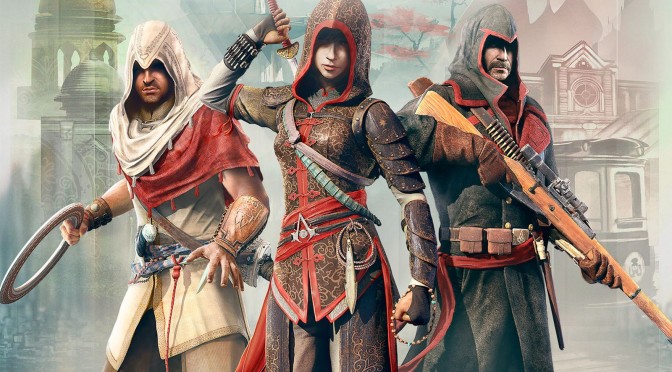
Assassin's Creed China/India/Russia Trilogy Pack


Russia
Had you all but given up on the Assassin’s Creed: Chronicles series soon after the miseries of India? You’re not alone. The most unexpected issue about the third and final chapter, Russia, is that it in fact merits providing the spin-off saga one last try. In fact, it’s a decent finisher, supplying some substantially-necessary surprises, two likable heroes and an intriguing plot to tie the whole shebang with each other. Most effective of all, you can play it as a direct sequel to China and pretend that India in no way existed – very good news if you had been wise enough to skip the middle game.


Right here the setting is revolutionary Russia in late 1918, with our hero a tired, disaffected old assassin, Nikolai Orelov, operating 1 last mission before going AWOL from the order. Orelov is on the trail of that old AC chestnut, a piece of Eden, but on infiltrating the mansion where it’s held he finds an additional prize: an enigmatic figure from history who turns out to be a second protagonist for the game.

The dual character strategy is one of the very best issues about Russia. For parts of every level you’ll be Orelov: a tough, knowledgeable killer with a rifle, bayonet and Tesla-modified grapple, beneficial for pulling down platforms and shorting the generators applied for electrified barriers and spotlights. For other components you’ll switch to his charge, a younger, much more vulnerable character with a increasing set of capabilities, including a rope-blade and a lot of of the cloaking, position-shifting helix powers we’ve encountered in the initially two Chronicles games.

Predictably, there are sequences where one protects the other but Russia is also smart to hit you with a series of escort missions. The focus is constantly on changing the pace, ensuring that a stealth sequence switches to a chase sequence which flips into a guard slaughtering challenge. We even get 3D sniping sequences, assisting to mix up what’s otherwise one more 2.5D stealth/platform game.


You could wonder how Assassin’s Creed may possibly function in such a comparatively modern setting, but snipers, spotlights, gas explosions electrified barriers and machine gun nests build credible new challenges for our heroes, whilst Orelov’s rifle can be handy for distractions and taking out foes at long range. You’ve also got to really like a game exactly where the telephone becomes an asset, permitting you to contact a guard in a different room to distract him from his post.

Meanwhile, the use of more familiar events and well-known figures provides Russia a bit of the historical grounding that’s so integral to the Assassin’s Creed practical experience, and that the Chronicles series has at times missed. Throw in a new visual style, with a restrictive orange, red and grey colour palette pulled from early Soviet posters, and 1918 Russia turns out to be as robust a setting as 16th Century China.


On the down side, Russia can still really feel like you’re rehearsing a series of moves, trying to get every single one down to a science, then obtaining the signature new move essential at the finish. Hello, sudden death. Improved luck next time. Your job isn’t to experiment or improvise, but to figure out what the developers had in their heads then do your utmost to deliver it. At the worst, Russia needs levels of patience and persistence that many of us just won’t have.

In Chronicles: India, this proved disastrous for my involvement in the game, but then India didn’t have adequate spark or interest to get me through the bad scenes. Russia does. It has sturdy, memorable characters, excellent narrative hooks and adequate suspense and excitement to pull you through just one particular more go. It’s not good enough to turn the Chronicles saga from a curiosity into a need to-have, but at least it ends it on the same optimistic vibe that China kicked it off with.

Verdict

With two engaging heroes, a solid story and some great new gadgets and mechanics, Russia brings the Assassin’s Creed spin-off series to an unexpectedly close to a 10 score. Unforgiving difficulty and some tiresomely rigid insta-fail level styles make it a tough game to appreciate unreservedly, but if you liked China and loathed India, this is the best one of the bunch.